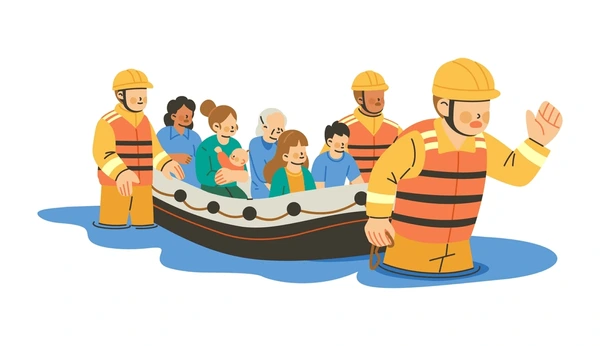
In the moments after a crisis strikes—be it a sudden flood, a devastating fire, or a crippling cyclone—the world’s attention turns to large-scale international aid organizations. Their work is vital. But in the critical first hours, long before the heavy equipment and global logistics can be mobilized, another kind of team is already in motion. They are the grassroots disaster relief teams: small, agile, community-based groups fueled by local knowledge and an unwavering commitment to their neighbors. This is an inside look at the anatomy of such a team—their structure, their challenges, and their profound, immediate impact.
The Genesis: Born from Necessity
A grassroots disaster relief team is rarely formed in a boardroom. It’s born in the crucible of a shared crisis. It often starts with a few individuals—a local community leader, a retired nurse, a resourceful shop owner, a student with a strong back—who see a need and cannot look away. Their founding principle is simple: proximity and passion.
Let’s imagine a fictional team, the “Delta River Guardians,” formed in a coastal region of Bangladesh prone to monsoonal flooding. Their origin wasn’t a strategic plan; it was a response. During a particularly bad flood, a handful of friends used their personal fishing boats to rescue families trapped on rooftops. They shared their own food, collected dry clothes from their closets, and coordinated via a simple group chat on their phones. After the waters receded, they made a pact: “Next time, we’ll be ready.” And with that, a charity team was born.
The Anatomy of the Team: A Living Organism
Unlike hierarchical organizations, a grassroots team functions more like a living organism, with interconnected parts that adapt to the situation. While roles may be fluid, several key functions emerge:
- The Coordinator (The Nerve Center): This individual is the central hub of communication. They don’t necessarily command, but they connect. They monitor weather reports, maintain a list of vulnerable households, and are the primary point of contact for the team. During a crisis, their phone becomes the lifeline, dispatching smaller groups, tracking resource needs, and filtering incoming information.
- The Logistics & Resource Manager (The Quartermaster): This person is the master of “stuff.” They know where to find essentials quickly and affordably. Their responsibility includes maintaining a small, ready stockpile:
- First-aid kits
- Dry food rations (chira, gur, biscuits)
- Clean drinking water or purification tablets
- Tarpaulins and rope
- Torches, batteries, and power banks They are also experts in sourcing and transportation, knowing which roads will be flooded and who owns a boat or a truck that can be borrowed in an emergency.
- The Field Operations Team (The Ground Force): This is the largest and most visible part of the team. Comprised of volunteers from all walks of life, they are the ones performing search and rescue, distributing aid, and setting up temporary shelters. Their greatest asset is their local knowledge. They know the winding alleyways, the families with elderly or disabled members, and the safe high ground that won’t appear on any official map. Their work is physically demanding and emotionally taxing.
- The Communications & Outreach Lead (The Storyteller): In the modern age, this role is crucial. This person manages the team’s social media presence and communicates with the wider community. Their job is twofold:
- Inward Facing: To recruit volunteers and inform the local community about safety measures and distribution points.
- Outward Facing: To share authentic stories and photos (with permission) of their work. This builds trust and is the primary driver for local donations—a Tk 500 ($5) donation from a neighbor, a box of food from a local grocer. They show the direct impact of every contribution.
A Mission in Motion: The First 48 Hours
To understand their effectiveness, consider the “Delta River Guardians” during a cyclone warning.
- T-24 Hours: The Coordinator activates the team via a group message. The Logistics Manager confirms the stockpile and arranges for a tempo truck. The Communications Lead starts posting warnings and safety tips on their Facebook page.
- T-6 Hours: The storm makes landfall. The Field Teams are on standby in relatively safe locations, ready to move as soon as the worst has passed.
- T+2 Hours: The wind and rain subside. The Coordinator, receiving calls and messages from affected areas, dispatches the Field Teams. A team of three heads to a low-lying village known for its vulnerable elderly population. Another team begins distributing food packets from a pre-determined point at a local school.
- T+12 Hours: The teams have rescued a dozen families and provided initial food and water to hundreds. The Communications Lead posts a call for specific donations—baby food and saline—based on real-time feedback from the field. Local donations start coming in.
- T+48 Hours: While larger aid agencies are still assessing the damage to plan their response, the “Delta River Guardians” have already provided the critical, life-sustaining bridge of support.
The Inevitable Hurdles: Passion vs. Practicality
The path of a grassroots team is fraught with challenges that can test their resolve.
- Volunteer Burnout: The work is emotionally and physically draining. Volunteers have their own families and jobs to worry about. Sustaining motivation after the initial adrenaline rush is a constant struggle.
- Funding Instability: These teams run on a shoestring budget, relying on small, inconsistent local donations. They often lack the resources for proper equipment, fuel, or even basic protective gear for their volunteers. The equation is often a stark choice: Fueltruck=20×Foodpackets.
- Scaling and Formalization: As a team becomes more successful, the pressure to formalize—to register as an NGO, maintain audited accounts, and create a formal structure—can be overwhelming. This risks replacing their agile, fluid nature with bureaucracy.
- The Emotional Toll: Bearing witness to suffering takes a heavy toll. Unlike professionals, grassroots volunteers often lack access to formal mental health support or debriefing sessions.
The Ripple Effect: Measuring True Impact
The success of a team like the “Delta River Guardians” cannot be measured solely in the number of blankets distributed or meals served. Their true impact is a ripple effect through the community.
They build social cohesion by connecting neighbors. They empower local citizens, proving that anyone can be a leader in a time of crisis. Most importantly, they deliver aid with something that large-scale operations often struggle with: dignity and familiarity. The person handing you a bottle of water is not a stranger in a uniform; they are your neighbor, someone who knows your name and asks about your family.
In a world of global crises, the grassroots charity team is a powerful reminder that the most effective response often begins with a simple, human act: a neighbor helping a neighbor. They are the heartbeat of community resilience, the first responders of the heart.